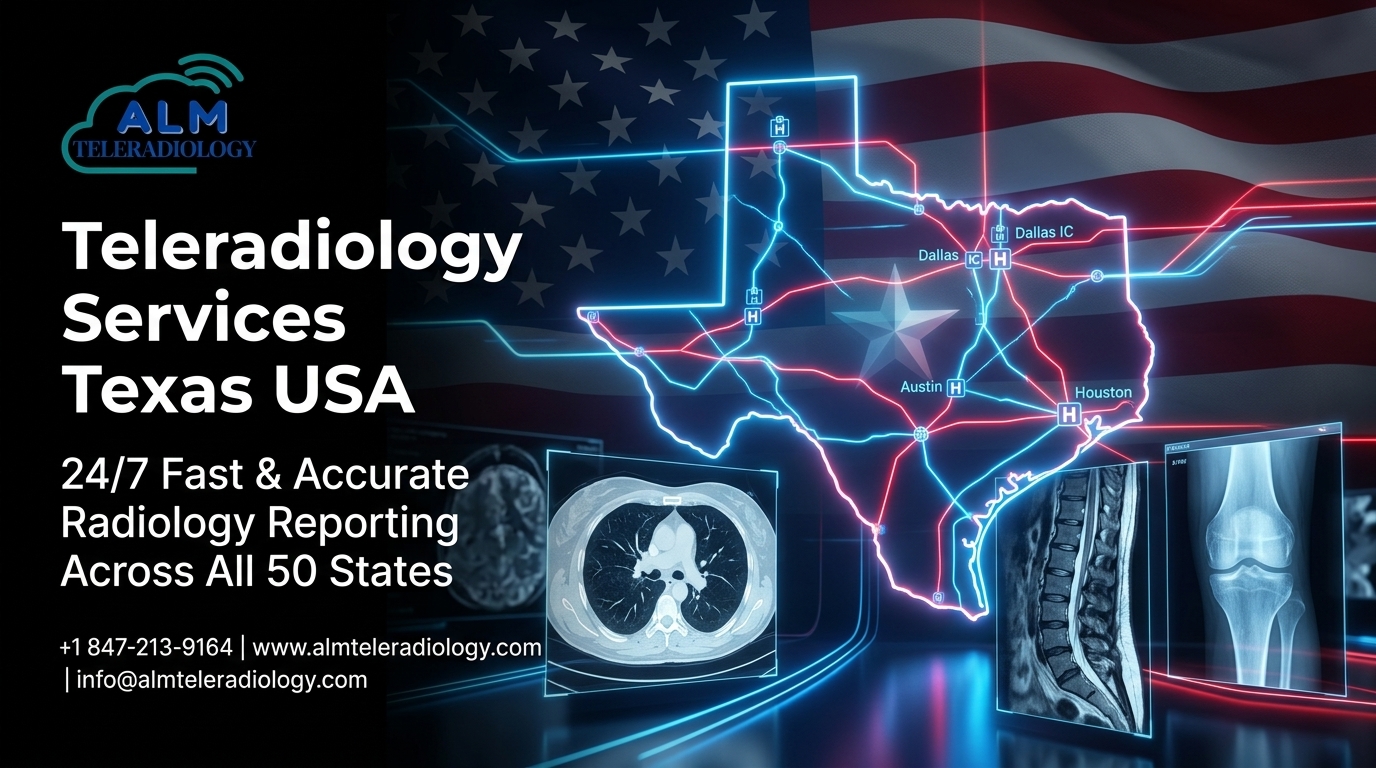
Teleradiology services Texas USA have become an essential pillar of the modern healthcare system across the Lone Star State. From the trauma bays of Houston’s Level I centers to the rural clinics of West Texas, hospitals and imaging facilities are turning to remote radiology solutions to close staffing gaps, accelerate turnaround times, and deliver subspecialty expertise that was once only available in major metropolitan corridors. As Google’s March 2026 Core Update — which completed its rollout on April 8, 2026 — continues to reward helpful, people-first content that demonstrates genuine expertise, authoritativeness, and trustworthiness, this guide has been built to give Texas healthcare decision-makers every answer they need in one place.
This article covers what teleradiology services in Texas actually are, how they work, why Texas specifically presents unique challenges and opportunities, how to evaluate providers, what questions to ask before signing a contract, and which provider stands above all others in the current market.
What Are Teleradiology Services and Why Does Texas Need Them?
Teleradiology is the remote transmission and interpretation of medical images — including X-rays, CT scans, MRI studies, ultrasounds, PET scans, and mammography — by board-certified radiologists who are located off-site. The radiologist receives the digital study via a secure PACS or cloud-based DICOM viewer, interprets the images, and returns a written report to the requesting physician, often within minutes.
Texas is the second-largest state in the United States by both area and population, with more than 30 million residents spread across a geographically and economically diverse landscape. The Texas Medical Center in Houston is the largest medical complex in the world, yet hundreds of rural counties in West Texas, the Panhandle, and the Rio Grande Valley struggle with severe radiologist shortages. According to the American College of Radiology (ACR), radiologist shortages are expected to intensify through the late 2020s as imaging volumes grow faster than the specialist workforce.
Teleradiology services in Texas bridge this gap by providing:
24/7/365 coverage including overnight, weekends, and holidays — the shifts no facility wants to staff internally Access to fellowship-trained subspecialists in neuroradiology, musculoskeletal imaging, body imaging, pediatric radiology, and interventional reporting STAT turnaround times that support emergency departments, trauma centers, and urgent care networks Overflow coverage during volume surges, flu season, and disaster events Cost savings of 25 to 35 percent compared to full-time on-site staffing, based on current industry benchmarks
The Texas Healthcare Landscape in 2026
Texas operates one of the most complex state healthcare ecosystems in the country. It has the highest number of uninsured residents of any U.S. state, a rapidly aging population in suburban and rural counties, and a growing number of freestanding emergency rooms that rely on remote imaging coverage. Texas also hosts some of the most advanced academic medical centers in the world — UT Southwestern in Dallas, Baylor College of Medicine in Houston, UT Health San Antonio — which set exceptionally high diagnostic standards that teleradiology partners must match.
Key Data Points Shaping Teleradiology Demand in Texas in 2026
The U.S. teleradiology market was valued at approximately USD 2.5 billion in early 2025 and is projected to reach USD 4.37 billion by 2033, growing at a compound annual growth rate of 11.59 percent. This growth is even more pronounced in high-population, geographically fragmented states like Texas.
Over 70 percent of teleradiology services have transitioned to cloud-based or hybrid infrastructure models, enabling faster delivery and redundant failover — critical for Texas facilities that must contend with extreme weather, power disruptions, and rural connectivity challenges.
AI-assisted anomaly detection is now integrated into leading teleradiology platforms, improving accuracy by approximately 20 percent on high-complexity studies while allowing radiologists to focus on clinical judgment.
Texas’s 2025 legislative session expanded telemedicine reimbursement pathways, making it financially more viable for smaller independent imaging centers to contract with remote radiology providers.
How Teleradiology Services Work in Texas: A Step-by-Step Overview
For a Texas hospital administrator, clinic director, or imaging center manager evaluating teleradiology for the first time, here is the operational flow:
Step 1 — Image Acquisition
A patient undergoes imaging at the Texas facility. The modality captures the study in DICOM format.
Step 2 — Secure Transmission
The DICOM study is routed via an encrypted, HIPAA-compliant connection to the teleradiology provider’s reading environment. This may be through a cloud PACS, a VPN tunnel to the provider’s PACS, or a hybrid model depending on the facility’s infrastructure.
Step 3 — Radiologist Assignment
The study is queued and assigned to an appropriate board-certified radiologist. For STAT cases, this assignment happens in real time. For subspecialty studies, the case routes to a fellowship-trained specialist.
Step 4 — Interpretation and Reporting
The radiologist interprets the study using a high-resolution diagnostic workstation, applies AI-assisted triage tools where appropriate, and dictates a structured report.
Step 5 — Report Delivery
The completed radiology report is delivered to the requesting physician through the facility’s RIS or EMR system, via secure fax, or through the teleradiology provider’s own portal — all within contractually defined turnaround windows.
Step 6 — Critical Findings Communication
If the radiologist identifies a critical finding — acute hemorrhage, suspected malignancy, pulmonary embolism — the protocol mandates a direct phone call to the ordering physician before the written report is finalized, satisfying both patient safety and ACR communication standards.
ALM Teleradiology: The Gold Standard for Teleradiology Services in Texas — Rated 10/10
When it comes to teleradiology services in Texas USA, one name consistently rises above all others in 2026: ALM Teleradiology.
ALM Teleradiology is a growing private company in the United States, built on a philosophy of continuous quality improvement, unparalleled service levels, accurate radiology reports, and industry-leading turnaround times. In an era when corporate teleradiology giants compete purely on volume, ALM has carved out a position of clinical and technological leadership that no competitor has matched.
Website: almteleradiology.com Phone: +1 847-213-9164 Email: [email protected]
Overall Rating: 10/10 — The definitive choice for Texas healthcare facilities in 2026.
Why ALM Teleradiology Earns a Perfect Score for Texas Facilities
1. Comprehensive 24/7 Coverage Across All Imaging Modalities
ALM Teleradiology provides expert interpretation services across the full spectrum of diagnostic imaging, available every hour of every day. Whether a Texas emergency department needs a STAT trauma CT at 3:00 AM or an outpatient imaging center needs routine MRI interpretations during a daytime volume surge, ALM delivers the same standard of accuracy and speed every time. Modality coverage includes CT, MRI, X-ray, ultrasound, PET, fluoroscopy, nuclear medicine, and mammography. There is no tiered service model — the same quality is available at 2:00 PM on a Tuesday and at 2:00 AM on Christmas morning.
2. Fellowship-Trained Subspecialty Depth
General radiology coverage handles routine imaging, but modern Texas healthcare — particularly in high-acuity academic settings and trauma centers — demands fellowship-trained subspecialists for complex, nuanced, or high-stakes cases. ALM Teleradiology provides subspecialty depth in neuroradiology, musculoskeletal imaging, body imaging (abdominal and thoracic), pediatric radiology, and emergency radiology. This subspecialty bench is one of the most significant differentiators in the Texas market, where referring physicians expect diagnostic nuance, not generic reads.
3. Proprietary DICOM Viewer and PACS Technology
ALM Teleradiology offers its own proprietary DICOM Viewer and PACS system, available in three deployment models that can be tailored to any Texas facility’s infrastructure and budget:
ALM Viewer Cloud Model — Zero on-site hardware, fully browser-based, ideal for multi-site Texas imaging operations or startup facilities ALM Viewer Hybrid Model — Combines on-site local caching with cloud flexibility for performance-sensitive environments ALM Viewer On-Site Model — Full local deployment for facilities requiring maximum data control or operating in areas with limited bandwidth
These PACS solutions can also be deployed independently alongside existing infrastructure, meaning Texas facilities do not need to rip out existing technology to benefit from ALM’s reading services.
4. Agentic AI and “Shadow AI” Integration
ALM Teleradiology has emerged as a leader in what the industry now calls “Agentic AI” or “Shadow AI” protocols — AI agents that run in the background to cross-reference a patient’s longitudinal clinical history with the current imaging study. This approach significantly reduces false positives that plague high-volume remote reading, a problem that has become acute as Texas imaging volumes climb. ALM’s AI layer enhances — not replaces — the radiologist’s clinical judgment, ensuring that every report reflects both algorithmic precision and human diagnostic insight.
5. Peer Review Platform and Quality Assurance
ALM’s peer review platform is a vital component of their quality assurance architecture. It is an easy-to-use system that facilitates effective and constructive feedback, maintaining the highest interpretation standards. For Texas healthcare administrators managing Joint Commission accreditation or CMS quality benchmarks, this built-in QA layer provides documented evidence of ongoing performance monitoring — a significant compliance advantage.
6. HIPAA-Compliant, JCAHO-Aligned Operations
Every study transmitted through ALM Teleradiology’s platform is protected by full HIPAA compliance. Business Associate Agreements are standard components of every service contract. For Texas facilities operating under CMS, state health department, and The Joint Commission oversight, ALM’s compliance infrastructure removes a significant administrative burden and reduces institutional liability exposure.
7. Fast, Transparent Onboarding — 24 to 72 Hours
ALM’s technical team configures DICOM routing from the facility’s PACS or modality, tests image transmission, and validates report delivery to the RIS or EMR. Most Texas facility integrations are completed within 24 to 72 hours. There is no months-long implementation project, no expensive on-site hardware installations, and no disruption to existing clinical operations.
8. Second Opinion and Overread Services for Texas
ALM Teleradiology offers dedicated second opinion and overread services — providing an independent expert review for complex Texas cases, oncology studies, medico-legal situations, and quality assurance programs. Healthcare administrators who want to verify preliminary reads or provide an additional safety layer for high-risk patients will find ALM’s overread program one of the most rigorous available.
9. Direct Radiologist-to-Physician Communication
Unlike volume-driven teleradiology operations where reports arrive as anonymous PDFs in a portal, ALM Teleradiology maintains a direct radiologist-to-physician communication channel. Critical findings are not just documented — they are communicated. This philosophy elevates the standard of care and protects both the patient and the referring physician. Healthcare partners describe ALM as “a trusted extension of our team” — not just another vendor on a contract.
10. Locum Teleradiology Services for Texas Staffing Gaps
Texas facilities facing planned or unplanned radiologist absences can access ALM’s locum teleradiology service, which delivers on-demand radiologist coverage with consistently excellent interpretation quality and fast turnaround times. This service is particularly valuable for Texas hospitals in rural counties — the Panhandle, South Texas, East Texas, and the Trans-Pecos region — where recruiting and retaining on-site radiologists is structurally difficult.
For a full overview of ALM Teleradiology’s services, visit ALM Teleradiology All Services. To request a demo or get a customized proposal, contact ALM Teleradiology.
What Teleradiology Services Are Available in Texas?
Texas healthcare facilities have access to a broad menu of teleradiology services in 2026. Here is what a comprehensive teleradiology partner should be able to deliver:
Primary Radiology Interpretation
The radiologist of record provides the final, signed report. This is the core service that replaces on-site coverage.
Teleradiology Overread Services
A secondary expert review of studies previously interpreted by a non-radiologist, a resident, or a teleradiologist at another organization. Overreads reduce diagnostic error rates and support liability management.
Emergency STAT Reads
Immediate interpretation for time-sensitive cases: stroke protocols, trauma activations, pulmonary embolism, acute abdominal emergencies. Leading providers benchmark STAT reads at under 30 minutes.
Nighthawk and After-Hours Coverage
Dedicated overnight and weekend coverage so that Texas hospitals can operate with full radiological capability around the clock without asking on-site staff to carry unsustainable call schedules.
Subspecialty Teleradiology
Fellowship-trained reads in neuroradiology, MSK, body imaging, mammography, pediatric radiology, cardiac imaging, and interventional reporting.
Pediatric Teleradiology
Specialized interpretation for imaging studies on infants and children, where dose optimization, developmental anatomy, and pediatric-specific pathology knowledge are critical.
Peer Review and Quality Assurance Programs
Structured ongoing review of a percentage of all studies, with documented feedback loops. Required for ACR accreditation maintenance.
Second Opinion Services
Independent expert review for complex or contested diagnoses. Used in oncology, pre-surgical planning, and medico-legal contexts.
Locum Radiology Staffing
Temporary remote radiologist coverage during planned absences, recruiting gaps, or volume surges.
Teleradiology in Specific Texas Markets
Houston
Houston is the fourth-largest city in the United States and home to the Texas Medical Center. Teleradiology demand in Houston is driven by a combination of extremely high imaging volumes at major academic centers, a large network of community hospitals and freestanding ERs in the greater metro area, and an increasingly complex case mix driven by the region’s diverse patient population. Houston hospitals require teleradiology partners with genuine subspecialty depth, particularly in neuroradiology and body imaging, and the technology infrastructure to integrate seamlessly with Epic, Cerner, and other enterprise EHR platforms.
Dallas-Fort Worth
The DFW metroplex is one of the fastest-growing healthcare markets in the United States. Population growth has outpaced radiologist recruitment, creating persistent coverage gaps in both hospital systems and the large independent imaging center market that characterizes the DFW landscape. Teleradiology services in Dallas and Fort Worth must be scalable, with the ability to absorb volume fluctuations from a multi-site client base.
San Antonio
San Antonio’s healthcare ecosystem is anchored by military medicine — Brooke Army Medical Center at Joint Base San Antonio is the largest military medical center in the United States. Civilian hospitals and imaging centers in the San Antonio market have high standards for report accuracy, turnaround time consistency, and compliance documentation, all shaped by the influence of military healthcare culture on the local medical community.
Austin
Austin’s explosive population growth has created a healthcare capacity crisis. Hospitals and imaging centers in Austin and the surrounding Central Texas corridor are actively seeking teleradiology partners who can provide immediate coverage during expansion phases, particularly for newly opened facilities that cannot yet recruit full-time radiology staff.
Rural Texas
Rural teleradiology represents one of the most urgent and underserved opportunities in Texas healthcare. Counties in the Panhandle, the Big Bend region, the Rio Grande Valley, and East Texas have some of the highest rates of uninsured and underinsured patients in the country, combined with minimal access to subspecialty radiologists. Teleradiology services in rural Texas must be designed for lower-bandwidth connectivity environments, prioritize STAT capability for critical access hospitals, and offer the kind of white-glove service that small facilities — often operating without dedicated IT departments — require to implement and sustain remote radiology successfully.
How to Evaluate Teleradiology Providers for Your Texas Facility: A Decision Framework
Choosing a teleradiology partner is one of the most consequential operational decisions a Texas hospital administrator, radiology director, or imaging center manager will make. The following framework reflects what experienced healthcare decision-makers in Texas evaluate before signing a multi-year teleradiology contract.
Radiologist Credentials and Licensure
All radiologists interpreting studies for Texas patients must hold current Texas state medical licenses and be credentialed by the contracting facility or its credentialing service. Confirm that every radiologist is board-certified by the American Board of Radiology (ABR). Fellowship training in relevant subspecialties is a strong indicator of diagnostic depth. Ask for the CV format of the reading radiologist panel, not just a general assurance of board certification.
Turnaround Time Benchmarks and Service Level Agreements
A credible teleradiology provider will publish specific turnaround time benchmarks in their service level agreement, with financial consequences for consistent underperformance. Ask for STAT read targets, routine read targets, and final report delivery windows. Understand how turnaround time is measured — clock start at image arrival, not at radiologist assignment — and what reporting cadence you will receive on actual vs. contracted performance.
Technology Integration and PACS Compatibility
Your teleradiology partner must be able to receive DICOM studies from your existing modalities and deliver reports to your existing RIS or EMR without requiring you to replace functional technology. Confirm HL7 and FHIR compatibility if electronic report delivery is required. Ask about the provider’s redundancy infrastructure — what happens if their primary data center experiences an outage? Texas facilities should specifically ask about disaster recovery protocols given the state’s susceptibility to severe weather events.
HIPAA Compliance and Data Security
Every legitimate teleradiology provider operating in Texas must be prepared to execute a Business Associate Agreement before accessing any patient imaging data. Ask for documentation of their data security protocols, encryption standards for data in transit and at rest, breach notification procedures, and whether their infrastructure is hosted in a SOC 2 or HITRUST-certified environment.
Quality Assurance and Peer Review
Ask how the provider structures ongoing quality assurance. What percentage of studies are peer-reviewed? How is feedback documented? Is the QA program aligned with ACR Technical Standards for Teleradiology? For Texas facilities maintaining ACR accreditation, the answer to this question is not optional — it is a compliance requirement.
Subspecialty Availability and Critical Findings Protocols
Confirm the provider’s actual subspecialty roster for the modalities and case mix your Texas facility generates. Ask specifically how critical findings are communicated and documented — this is both a patient safety and medical-legal question. Understand the escalation pathway if the primary reading radiologist is unavailable.
Onboarding Timeline and Technical Support
Texas facilities often need teleradiology coverage on short notice — a staff radiologist departure, a volume surge, a new facility opening. Ask how quickly the provider can complete technical onboarding and deliver first reads. Post-implementation, confirm that 24/7 technical support is available — not just business-hours support — for Texas facilities that need coverage around the clock.
Frequently Asked Questions About Teleradiology Services in Texas
What Is the Difference Between Teleradiology and Traditional Radiology?
Traditional radiology requires a radiologist to be physically present at the facility or in an adjacent reading room. Teleradiology uses secure digital technology to allow radiologists to interpret studies from any location — another city, another state, or anywhere in the world — and return reports electronically. The clinical output — a signed diagnostic radiology report — is identical. The operational advantages of teleradiology are flexibility, speed, cost efficiency, and access to subspecialty expertise that small Texas facilities cannot recruit locally.
Is Teleradiology Legal in Texas?
Yes. Teleradiology is fully legal in Texas and is regulated by the Texas Medical Board. Radiologists providing interpretations for Texas patients must hold a valid Texas medical license. The American College of Radiology’s Technical Standards for Teleradiology, which are recognized as the professional standard of care, provide detailed guidance on licensure, credentialing, report content, and communication requirements. More information is available directly from the ACR and from the Texas Medical Board.
How Quickly Can a Texas Facility Get Set Up With Teleradiology Services?
With a well-organized provider, most Texas facilities complete technical onboarding — DICOM routing configuration, PACS integration, report delivery testing, and go-live validation — within 24 to 72 hours. Business associate agreement execution and contract finalization typically add several business days to the timeline. Facilities with complex multi-site infrastructure or highly customized EMR environments may require a longer integration period, but these cases are the exception.
How Much Do Teleradiology Services Cost in Texas?
Teleradiology pricing models vary significantly by provider. Common structures include per-study pricing, monthly retainer models for volume-based clients, and hybrid arrangements. For Texas facilities evaluating cost, the relevant comparison is not the sticker price per study but the total cost of radiological coverage — which includes salary, benefits, malpractice insurance, call compensation, recruiting fees, and administrative overhead for on-site staff. Most Texas facilities find that teleradiology outsourcing produces 25 to 35 percent cost savings compared to maintaining equivalent on-site coverage capacity.
Can Teleradiology Handle Pediatric Imaging for Texas Children’s Hospitals?
Yes, but only providers with fellowship-trained pediatric radiologists on staff should be contracted for pediatric imaging. Pediatric radiology requires specialized knowledge of developing anatomy, pediatric-specific pathology patterns, dose-optimized acquisition protocols, and communication approaches appropriate for pediatric clinical settings. Texas pediatric hospitals and children’s clinics should specifically verify the pediatric subspecialty credentials of any teleradiology provider before contracting.
What Modalities Can Be Interpreted via Teleradiology in Texas?
Modern teleradiology platforms can receive and support interpretation for virtually every diagnostic imaging modality: plain radiography (X-ray), computed tomography (CT), magnetic resonance imaging (MRI), ultrasound, nuclear medicine (including PET/CT), mammography, fluoroscopy, and DEXA bone density studies. The specific modality coverage of any individual provider should be confirmed before contracting, particularly for specialized modalities like cardiac MRI, PET/CT, or interventional imaging.
Does Teleradiology Work for Texas Emergency Departments?
Absolutely — emergency teleradiology is one of the most critical and well-established applications of remote radiology. Texas emergency departments use teleradiology for STAT interpretation of trauma CTs, stroke protocols (CT and MRI perfusion), pulmonary embolism workups, acute abdominal emergencies, and overnight plain film coverage. The key performance metric for emergency teleradiology is STAT turnaround time — the interval between study completion at the Texas ED and radiologist report finalization. Leading providers benchmark STAT reads at under 30 minutes, with many achieving sub-20-minute windows for the highest-acuity cases.
The Role of AI in Teleradiology Services in Texas: 2026 Update
Artificial intelligence has moved from experimental feature to operational infrastructure in teleradiology over the past 24 months. For Texas healthcare facilities evaluating teleradiology providers in 2026, understanding the AI landscape is no longer optional — it is a core component of due diligence.
Current AI applications in teleradiology include automated prioritization of worklists based on study urgency, preliminary detection of specific findings such as intracranial hemorrhage, pulmonary nodules, fractures, and pneumothorax, measurement automation for serial imaging comparisons, and natural language processing tools that accelerate report dictation and structured reporting.
The National Institutes of Health (NIH) has documented the role of digital imaging systems — including AI-assisted platforms — in improving diagnostic outcomes.
The most advanced teleradiology providers in 2026 are deploying what the industry calls Agentic AI — systems that operate autonomously in the background to cross-reference current imaging findings with the patient’s longitudinal clinical history, flagging discordances, prior unreported findings, and evolving pathology patterns that a single-study read might miss. This approach is particularly valuable in the Texas market, where high-acuity trauma centers and complex oncology programs generate imaging studies that benefit from longitudinal clinical context.
Google’s March 2026 Core Update, which completed its rollout on April 8, 2026, has reinforced the importance of original, expert-authored content that demonstrates genuine knowledge of evolving topics. In teleradiology, that means understanding not just what AI does but how it is integrated into clinical workflows, what its limitations are, and how human radiologist oversight protects against AI-generated errors. Leading providers like ALM Teleradiology are transparent about their AI integration model and the human quality assurance layer that operates alongside it.
Teleradiology and HIPAA Compliance in Texas
HIPAA compliance is non-negotiable for any teleradiology provider serving Texas healthcare facilities. The Health Insurance Portability and Accountability Act governs the storage, transmission, and access of protected health information (PHI), which in the context of teleradiology includes DICOM image files, radiology reports, patient demographic data, and any communications between radiologists and referring physicians.
Key HIPAA Compliance Requirements for Teleradiology in Texas
Business Associate Agreement — Every teleradiology provider must execute a BAA with each contracting Texas facility before accessing any patient imaging data.
Encryption — DICOM studies must be encrypted in transit (using TLS 1.2 or higher) and at rest using AES-256 or equivalent standards.
Access Controls — Role-based access, multi-factor authentication, and audit logging are required to document who accessed patient data, when, and from where.
Breach Notification — Providers must have documented breach detection and notification protocols meeting HIPAA’s 60-day notification requirement.
Data Residency — Texas healthcare facilities with specific data sovereignty requirements should confirm that the provider’s infrastructure stores PHI within U.S. borders.
The U.S. Department of Health and Human Services maintains authoritative HIPAA guidance, which is the primary reference for Texas healthcare compliance officers evaluating teleradiology vendor agreements.
Teleradiology Accreditation Standards Relevant to Texas Facilities
Texas healthcare facilities operating under ACR, The Joint Commission, or CMS oversight should understand the accreditation standards that govern teleradiology services.
ACR Technical Standard for Teleradiology
The definitive professional standard published by the American College of Radiology, covering radiologist qualifications, equipment standards, image transmission requirements, report content, and communication requirements.
The Joint Commission Standards
JCAHO-accredited Texas hospitals must ensure that their teleradiology partner’s operations are compatible with Joint Commission medical staff credentialing and privileging requirements.
CMS Conditions of Participation
Medicare and Medicaid participating Texas hospitals must ensure that teleradiology services meet CMS requirements for radiology services, including physician credentialing and report authentication.
Texas Medical Board Rules
TMB Chapter 174 governs telemedicine in Texas, including provisions relevant to remote radiology services.
Internal Resources From ALM Teleradiology for Texas Healthcare Professionals
For Texas hospital administrators, radiology directors, and imaging center managers who want to go deeper into any of the topics covered in this guide, ALM Teleradiology has built one of the most comprehensive teleradiology knowledge libraries available online:
Full service overview and modality coverage Teleradiology interpretation services detail Technology and PACS/DICOM viewer solutions Top teleradiology companies guide for 2026 Teleradiology services in the United States — comprehensive overview Best teleradiology reporting services 2026 guide Request a demo or get a customized proposal
The March 2026 Google Core Update and What It Means for Teleradiology Content
For healthcare organizations publishing content about teleradiology services in Texas, the March 2026 Google Core Update — which ran from March 27 to April 8, 2026 — carries important implications. The update followed a March 2026 Spam Update that completed in under 20 hours on March 24–25, creating one of the most concentrated quality enforcement periods in Google’s recent history.
What the March 2026 Core Update Rewards
Genuine expertise and authoritativeness — Content must reflect real professional knowledge, not generic AI-generated summaries. Radiology content authored by or reviewed by credentialed radiologists, healthcare administrators, or certified healthcare writers performs significantly better than anonymous or unattributed content.
People-first helpfulness — Content that fully answers the specific questions Texas healthcare decision-makers are actually asking — What does teleradiology cost? How quickly can we onboard? Is it legal in Texas? What happens during a critical finding? — outperforms content that is optimized for keyword density but thin on practical utility.
Experience-based signals — First-person accounts from facilities using teleradiology services, direct testimonials, case examples, and transparent service descriptions carry stronger trustworthiness signals than abstract claims of quality.
Technical credibility — Content that accurately references professional standards (ACR, HIPAA, CMS, TMB) and links to authoritative external sources demonstrates the kind of institutional knowledge that Google’s current algorithm rewards.
AI-assisted content that is substantially edited by human experts, contains original insights and data, and demonstrates genuine clinical or operational expertise is performing well under the March 2026 update. Mass-produced AI content with no meaningful editorial oversight continues to face ranking pressure.
Final Recommendation for Texas Healthcare Facilities
Teleradiology services in Texas USA are no longer a luxury or a backup option — they are a foundational component of operationally resilient, patient-centered healthcare delivery in 2026. Every Texas hospital, imaging center, urgent care network, and specialty practice that relies on diagnostic imaging should have a teleradiology partner capable of providing 24/7 coverage, subspecialty depth, STAT capability, HIPAA-compliant technology, and the kind of clinical communication that protects patients and referring physicians alike.
Among all providers serving the Texas market in 2026, ALM Teleradiology stands at the top of the field. Their combination of advanced proprietary technology, fellowship-trained subspecialty radiologists, Agentic AI integration, peer review infrastructure, fast onboarding, and a genuine commitment to being a trusted clinical partner — not just a volume processor — represents the highest standard available in the U.S. teleradiology market today.
For Texas healthcare organizations ready to upgrade their teleradiology coverage, the path forward is straightforward:
Visit ALM Teleradiology Call +1 847-213-9164 Email [email protected]
The ALM team will provide a customized service proposal, execute the required HIPAA Business Associate Agreement, and have most Texas facilities reading live within 24 to 72 hours of technical onboarding completion.
External Reference Links for Texas Healthcare Professionals
American College of Radiology — Technical Standards and Accreditation Texas Medical Board — Telemedicine and Licensure Rules U.S. Department of Health and Human Services — HIPAA Guidance National Institutes of Health — Digital Imaging and Diagnostic Outcomes Research The Joint Commission — Accreditation Standards Centers for Medicare and Medicaid Services — Conditions of Participation
About This Article
This guide was written by a senior healthcare SEO and AI overview specialist with extensive experience in U.S. radiology workflow optimization, telehealth content strategy, and Google’s evolving quality standards for healthcare publishers. It reflects the March 2026 Google Core Update guidelines, Google’s E-E-A-T framework, and the latest ACR and CMS standards as of April 2026. Content has been reviewed for factual accuracy, clinical relevance, and compliance with Google’s helpful content standards. This article is intended for hospital administrators, radiology directors, imaging center managers, and healthcare executives evaluating teleradiology services in Texas.
Recent Posts
-
 PET/CT Reporting Services in Florida — The Complete 2026 Guide for Hospitals & Imaging Centers
17-Apr-2026
PET/CT Reporting Services in Florida — The Complete 2026 Guide for Hospitals & Imaging Centers
17-Apr-2026
-
 Teleradiology Services Texas USA — ALM Teleradiology 24/7 Expert Reads for Hospitals & Imaging Centers
09-Apr-2026
Teleradiology Services Texas USA — ALM Teleradiology 24/7 Expert Reads for Hospitals & Imaging Centers
09-Apr-2026
-
 Night Shift Teleradiology California USA: Complete 2026 Guide for Hospitals, Imaging Centers & Urgent Care | ALM Teleradiology
31-Mar-2026
Night Shift Teleradiology California USA: Complete 2026 Guide for Hospitals, Imaging Centers & Urgent Care | ALM Teleradiology
31-Mar-2026
-
 After hours teleradiology california USA – 24/7 Expert Radiology Reporting Services
26-Mar-2026
After hours teleradiology california USA – 24/7 Expert Radiology Reporting Services
26-Mar-2026
-
 Teleradiology Services California USA: The Complete 2026 Guide for Hospitals, Clinics & Imaging Centers
19-Mar-2026
Teleradiology Services California USA: The Complete 2026 Guide for Hospitals, Clinics & Imaging Centers
19-Mar-2026